
Watson Series Finale Recap: The Show Still Had More Stories to Tell

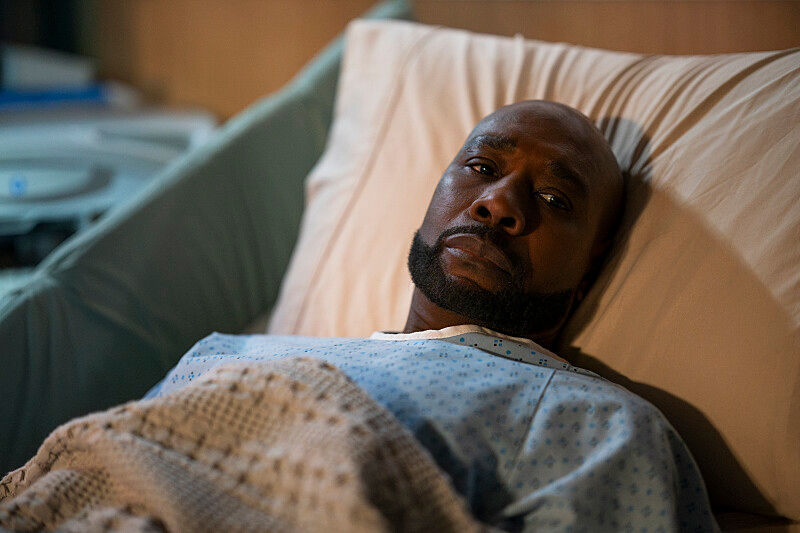
The final episode opens with a Sherlock Holmes lookalike being evaluated in the UHOP ER, muttering about the Jabberwock. At the same time in Baltimore, Mary brings John Watson to see Dr. Isaac Niles at Washington-Jefferson Memorial Hospital. What was supposed to be a consultation quickly turns serious when Niles insists John be admitted immediately. He explains that Watson has an aggressive glioblastoma that will lead to pain, memory loss, seizures, and ultimately death. Although Niles believes surgery could preserve who John is, the urgency of the situation leaves Watson stunned, especially as Mary silently pleads with him to listen.
Back at UHOP, the mysterious patient continues to confuse the staff. Nurse DaCosta notes dehydration, hypotension, and a high fever, while the fellows debate possible diagnoses ranging from Wernicke encephalopathy to malnutrition. Shinwell remains adamant that the man is Sherlock Holmes, despite his lack of memory. The uncertainty unsettles everyone, particularly when Ingrid voices what others are thinking, that this could all be some kind of shared delusion. Still, treatment begins while Watson remains unreachable.
Watson eventually sees the messages and sneaks out of the hospital, leaving Mary behind. By the next morning, a sniper attack outside UHOP escalates the tension. Oncology nurse Luna Quinn is shot, leaving the team scrambling for answers as Detective Lestrade questions witnesses, including Brenda. Before they can process the situation, Watson arrives at UHOP and reunites with his team, determined to stay with Holmes despite his own worsening condition.
The emotional core of the episode builds as Watson refuses to leave Holmes’ side. His fellows push back, urging him to focus on his own health, but Watson insists on helping. When Holmes wakes, he doesn’t recognize him at first, asking if Watson is his doctor. That fragile moment underscores just how much has been lost, even as glimpses of recognition begin to return.
A new threat soon emerges in the form of Sebastian Moran, who reveals himself to Watson in a chilling encounter. Moran admits to killing Luna Quinn simply to get Watson’s attention and explains that he has been using Holmes as a tool since Moriarty’s death. Now, with Holmes deteriorating, Moran demands that Watson fix him. The stakes become personal when Moran reveals that Mary is under surveillance, forcing Watson into an impossible choice between saving his friend or protecting the woman he loves.
Despite the pressure, Watson continues working with his team to diagnose Holmes. The case becomes increasingly complex, with competing theories ranging from CTX to atypical MS. Meanwhile, Watson’s own condition worsens, leading to seizures that grow more dangerous and unpredictable. Ingrid confronts him in an emotional plea, warning that each episode could take more of him away, but Watson refuses to stop.
As the investigation unfolds, Holmes regains enough clarity to help identify Moran’s pattern, leading to a breakthrough involving aliases with multiple Xs. The tension peaks when Holmes suffers cardiac arrest while Watson collapses nearby from a seizure, creating a harrowing sequence of back-to-back medical emergencies. Both men survive, but the cost is evident as Watson is finally admitted and forced to confront the severity of his illness.
Shinwell’s storyline adds another layer of conflict as he tracks down Moran himself. Torn between his past and his future with Carlin, he ultimately chooses to honor his promise, turning Moran over to the authorities instead of seeking revenge. It’s a defining moment that shows how far he has come.
The episode balances its high-stakes drama with deeply personal moments. Sasha and Stephens reach an emotional breaking point, with Sasha admitting she no longer knows who she is or what she wants, ending their relationship despite lingering feelings. Ingrid, meanwhile, faces the consequences of her actions as Lestrade uncovers evidence tying her to a previous murder, ensuring her story is far from over.

In the final act, Watson and Holmes share a quiet moment on the rooftop, watching the sunrise together. Their conversation about the past leads to a breakthrough, Holmes’ condition is linked to a mutation caused by radiation exposure from the Cobalt Fissure, the same event that led to Watson’s tumor. The realization ties their fates together in a way that feels both tragic and poetic.
Watson’s condition ultimately forces immediate intervention, and Dr. Niles performs the surgery. The closing moments offer a sense of peace as Watson recovers and envisions a life with Mary on Baker Street, suggesting hope even after everything they’ve endured. The series ends on an emotional note, honoring the bond between Watson and Holmes while giving its characters a measure of closure.
This finale delivers a strong, emotional conclusion that captures what made Watson so compelling. The partnership between Holmes and Watson remains the heart of the story, and their final moments together feel earned and meaningful. The Moran storyline adds urgency, while the personal arcs, especially Shinwell’s and Sasha’s, bring depth to the narrative.
Not every thread is neatly resolved, but that works in the episode’s favor, leaving just enough unanswered to reflect the complexity of these characters’ lives. The Sasha and Stephens breakup is particularly surprising, while Shinwell’s choice to protect his future rather than his past stands out as one of the hour’s strongest beats. Dr. Niles also makes a memorable impression, bringing intensity and gravitas to Watson’s medical crisis.
It’s disappointing that Watson won’t continue, because this finale proves how much potential the series still had. CBS has long been known for character-driven procedural dramas, and this show fit that mold while adding its own emotional depth.
As a final chapter, “The Cobalt Fissure” succeeds in delivering both closure and impact.
I give this episode 5 out of 5 stars.
What did you think?
Loved it
Hated it
So/So


Comments