
The Vampire Lestat Finale Review: Lestat Finally Faces His Greatest Failure—and It's Devastating

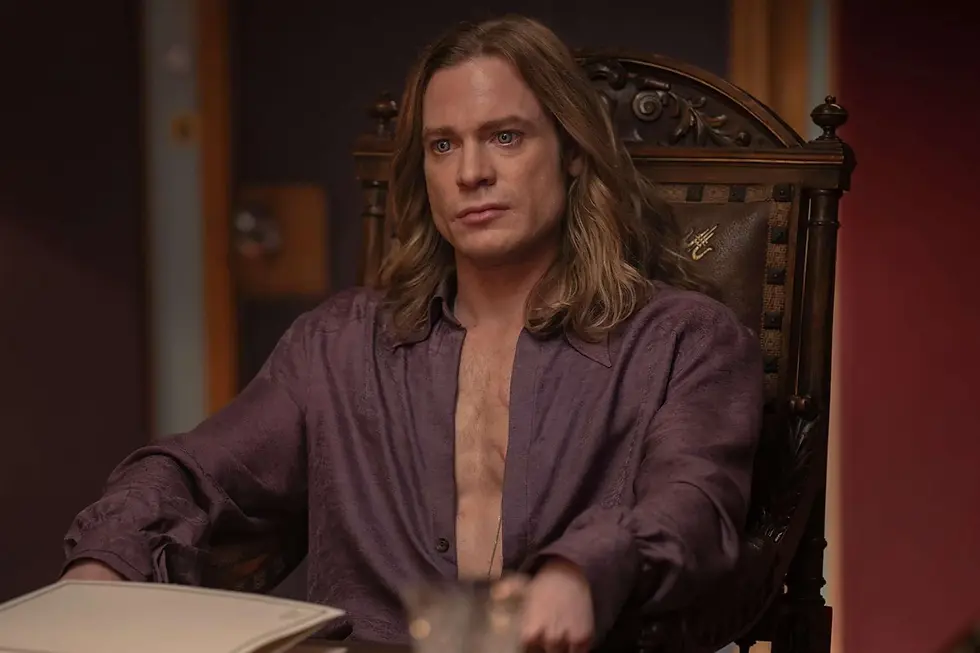
The Season 3 finale turns Lestat's reckoning into a grand moment of love, failure, and enduring
Failure is Inevitable and a Gift
The Vampire Lestat Episode 7, "The Failures," highlights the very story Lestat spends the entire season trying to control through his music, haunted memories, and edited narration. He performs it all with the grandeur and spectacle that we've come to know, love, and admire. But as we peel back the many layers in the Season 3 finale, director Alan Taylor and writer Hanna Moscovitch tear the stage and the performance away entirely.
What remains in its wake are all the people who impact and shape Lestat's views of the world and of himself. Those he loved. Those he admired. And those he failed who failed him in return. Each episode this season pulls us inside Lestat's confidence and his arrogance—his willingness to be himself without apology. But Episode 7 shifts that confidence into the very thing he's been hiding, showing us what happens after the stage light dims and the coffin lid closes.
When it's quiet.
When he dreams.
When he's alone.
Separated from his body and suspended somewhere between life, memory, and death, Lestat is trapped within his consciousness with an audience he can no longer escape nor control—his muses, the physical manifestation of failures who continue to define his life long after he feels he's freed himself from their influence.
Each failure—Gabriella, Magnus, Louis, Antoinette, Nikolas, and TC—wields Lestat's bad choices against him like a scythe, swiftly and unceremoniously dismantling the mythical construct of his being, and in the process, something extraordinary happens.
Lestat finds beauty in the pain they inflict, laughing at their accusations and recognizing the liberation underneath their cruelty.
| "If I failed...that means I actually attempted something."
Lestat doesn't say these words to exonerate himself. He simply refuses to allow his failures to eclipse the best parts of the life he's lived. And for someone who spent years suppressing his feelings for the sake of emotional proximity to those he loved, failure grants him the freedom to truly believe he can survive.
Paul Gives Lestat the Thing He Needs Most
One of the quietest yet most powerful moments of "The Failures" came in a form unexpected by everyone, even Lestat. A secret failure he's never acknowledged aloud.
Paul. His presence inside Lestat's consciousness could have existed as just a service to fans, an answer to a three-season curiosity about Lestat's hand in his demise. Instead, it becomes one of the most emotionally generous moments of the entire season, serving as the bridge of love between Louis and Lestat, speaking the one truth Lestat felt but never once heard uttered from Louis' lips.
Paul's presence reframes him beyond his original purpose. In the finale, he becomes the permission for Lestat to allow peace to carve out a space within 300 years of immeasurable pain. And amidst the pain is something sweet and unexpectedly funny as Paul, ever the protective little brother, tells Lestat he still wishes he were a woman, to which Lestat responds,
| "Me too sometimes."
The stillness in this moment captures the strangeness and beauty and complex nature of these characters that make us keep coming back for more.
The finale moves forward by revisiting the pastThe Vampire Lestat season finale doesn't end in victory. It ends with responsibility. Throughout the narration, the muted conversations, and the purposeful noise in the midst of dialogue, Lestat finally says the thing he's avoided all along:
"The fault was mine."
Not all of it, but his part in it. And not forever, but for long enough. Long enough to acknowledge his hand in the destruction—his fledglings, his loves, and the Great Conversion—without surrendering to the weight of it. While the concert is over and the performance is complete, the consequences have ushered in a new beginning.
And judging by those final moments, Queen of the Damned is preparing to explore not simply what Lestat destroyed but what survives after him.
What did you think?
Loved it
Hated it
So/So


Comments