
Chicago P.D. Season 13 Episode 9 ‘Heroes’ Recap: The Shocking Twist You Didn’t See Coming
- Zakiyyah

- Jan 15
- 4 min read
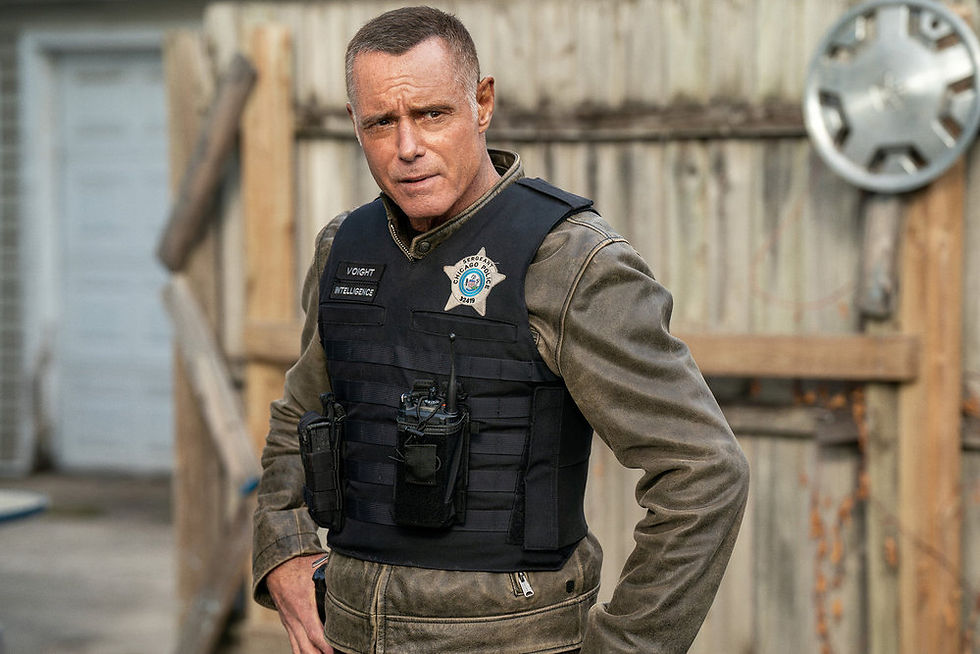
This episode of Chicago P.D. is one that is extremely emotionally intense and tightly constructed in recent memory, balancing procedural intensity with a deeply personal story that hits hard. It opens with Officer Robert McKay at the center of a case he’s been working on for two years: Adrian Rodriguez, the head of Los Gatos, and his crew are responsible for the majority of heroin in Humboldt Park and multiple homicides, and McKay has been determined to bring them down. From the start, we see McKay’s commitment, not just as a cop but as a man carrying the weight of responsibility, trying to protect the community and finally closing in on Rodriguez after years of investigation.
Early in the episode, McKay seeks help from Sergeant Trudy Platt, showing a side of him that is both professional and vulnerable. He needs her experience to make sense of a complex case involving a confidential informant and a suspect named Diego. Once Trudy helps him sort out the leads, McKay secures a warrant to raid a Los Gatos stash house and requests Trudy ride along for the operation. This moment establishes both their professional trust and personal connection, highlighting McKay’s reliance on her judgment and support as he prepares for what could be a dangerous move against Rodriguez and his crew.
But the tension spikes the next day when McKay is a no-show for the raid. Trudy immediately senses something is wrong and heads to his home, finding the front door unlocked. The scene builds suspense masterfully as she conducts a wellness check, ultimately discovering McKay’s body. Initially, everything suggests suicide, with the trajectory, missing round, and gun evidence pointing in that direction. Trudy, however, trusts her instincts, knowing McKay well enough to feel that something about the scene doesn’t add up. Her suspicion sets the stage for a deeper investigation, emphasizing that if McKay was suicidal she would know because she knew if amd was with him the night before.
As the episode unfolds, the focus shifts to finding Rodriguez and his accomplice Juan Mina, tying them to McKay’s house through surveillance, physical evidence, and leads from McKay’s CI, Inez Marin, who is Rodriguez’s cousin. Through GPS tracking, traffic cams, and the burned phone, the team is able to follow their movements and build a case, but the procedural victories are tempered by grief and uncertainty. McKay’s absence is felt in every step; his work and sacrifice hang over the investigation, motivating Trudy and the team to push harder. The problem is when interviewing Inez she lets Burgess know that McKay was usually always buzzed. In trying to tell Trudy this it is just something Trudy is unwilling to listen to. Burgess tries to have Trudy’s back, but also looking into the case with an unbiased eye at the same time.
After the interview with Inez she agrees to wear a wire to try to find out where Molina and Rodriguez are located. While watching close by, Inez gets a lead in where they possibly are. The team closes in on a possible residence they are located. Going into the home Molina is located, but he tries to run. He runs to the back right into Trudy. She gives the command to drop the weapon he doesn’t Trudy fires two shots and Molina is down. Trudy screams for him to tell him where Rodriguez is. It’s too late. Molina is DOA.
Burgess still doesn’t feel right about this case and decides to retrace the steps Molina and Rodriguez took that they found in the GPS. McKay’s phone is recovered by Burgess. At the same time Rodriguez is possibly spotted at a gas station and the team goes to apprehend him. The gas station is surrounded. He is apprehended and put in a squad car. Burgess requests to speak with Rodriguez alone. She tries to get him to open up to her but he refuses. She even tells him she knows he didn’t kill McKay, still nothing. Burgess gets in the front seat and tells Rodriguez a story. She tells him they did go to McKay’s home to get the name of the snitch, but when they got there he was already dead. They thought they could find out by taking his phone. That is why they moved the body. The problem was they couldn’t get into the phone so he ditched the phone and was in the process of moving his product. Burgess asks Rodriguez if this sounds right. He shook his head yes.
Burgess back at the station requests to speak to Trudy. Trudy is upset about the interruption because they want to get Rodriguez to crack. Burgess tells her she found McKay’s phone and with the code his wife provided she was able to get into the phone. What initially seems like a breakthrough quickly becomes devastating: McKay recorded a video message, a private letter revealing his pain, exhaustion, and feelings of failure. Watching Trudy and the team process the reality, that McKay was suffering in silence, and Rodriguez and Molina were present only after his death, hits in a way no one expected. Trudy’s response is raw and human; she acknowledges the truth while honoring McKay’s service. The episode makes it clear that grief doesn’t diminish his bravery, and that heroism and vulnerability can coexist. At the end of the day he was a good cop!
Finally, the episode balances closure and heartbreak. Rodriguez apprehension is satisfying from a law enforcement perspective, but the real resolution is emotional: McKay’s story is reclaimed on his own terms, through his own voice on the video. The final scenes emphasize memory, legacy, and honesty, rather than action beats or triumphs. The show closes not with relief but with reckoning, leaving the weight of McKay’s sacrifice in the hands of the people who loved him.
This episode works on multiple levels: the chase for justice is compelling, the investigation is smart and methodical, and the human story at its core,McKay’s internal struggle, his reliance on Trudy, and his tragic end, is profoundly affecting. It’s a reminder of the toll of police work, the limits of control, and the courage it takes to face danger every day.
What did you think?
Loved it
Hated it
So/So


Comments